About the Senado Federal
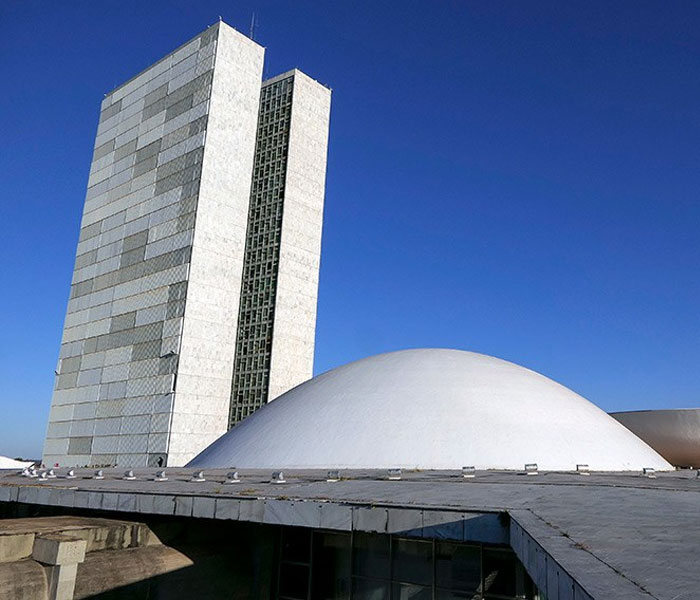
The Senado Federal is the legislative body that represents the states and the Federal District within Brazil’s National Congress. Responsible for deliberating on nationwide laws, overseeing the Executive Branch, and strengthening democracy, the Senado Federal operates in an environment where transparency, agility, and reliability are essential. In this context, Visual has established itself as the Senado Federal’s technology partner through a trajectory of continuous modernization of the plenary chamber, evolving mission-critical solutions that support the operation of its sessions.

The challenge
In 2008, the Senado Federal began a technological transformation of the plenary chamber with the implementation of Visual’s Electronic Voting System—an advanced solution for its time that raised the standards of reliability, security, and session operations.
In 2026, the challenge became different: to renew and update this already consolidated foundation, keeping pace with technological evolution and new requirements for usability, accessibility, and clarity of information in the plenary chamber. It was necessary to modernize the core points of visualization and interaction (displays and terminals), while maintaining the robustness, security, and stability built since 2008—and further reducing interruptions, operational questions, and delays caused by reading or interface limitations.
Overcoming the challenge
Solution applied:
The implementation carried out in 2008 met the Senado Federal’s technical specifications and security policy, with approval following a certification process conducted by UNICAMP, establishing a reliable system for presence, voting, recording, and the display of information in the plenary chamber.
In 2026, Visual led a technology renewal of the plenary chamber, replacing legacy resources with a more modern and intuitive digital experience—without compromising the environment’s reliability:
– Former screens were replaced by a continuous LED panel, increasing the amount of information displayed and improving legibility and accessibility throughout the plenary chamber;
– Voting terminals evolved into prisms and digital tablets, with smoother navigation and a smartphone-like user experience, making interaction easier for Senators;
– The modernization was driven by process security and efficiency, helping reduce requests for clarification and delays caused by limited visibility or difficulty understanding items during votes.
The renewal also respected the architecture and history of the plenary chamber, preserving and enhancing the lines and curves of the original design.
Benefits
• Greater agility in the presence and voting process
• Full transparency in legislative activities and increased visibility of plenary work
• Optimization of parliamentary activities
• Improved legibility and accessibility of displayed information
• Biometric identification for operators and Senators
• Modernization of the environment and the terminals’ user experience
• Enhanced security and traceability of the voting process
• Modernization of the legislative chamber