Governance Policy
Respect for the environment, social responsibility, and corporate governance
For over 40 years, VISUAL has incorporated into its institutional mission the development and integration of technology solutions that deliver real value to its extensive and respected client portfolio.
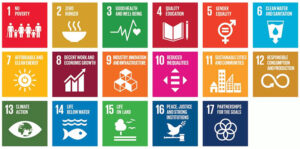
Through the adoption of intelligent institutional practices aligned with corporate improvement and social responsibility, VISUAL adheres to the best practices recommended by the UN’s 2030 Agenda for Sustainable Development (SDGs) — with a focus on waste reduction and recycling, rational use of water and electricity, and the personal and professional development of its team, contributing to society’s well-being through an inclusive and healthy work environment.
Our practices include:
• Promote, encourage, and invest in the acquisition of new knowledge and professional skills for our teams: VISUAL, through its Development Program, offers employees the opportunity for professional qualification by funding undergraduate and postgraduate courses.
• Substantially increase water use efficiency across all areas of the company and ensure the sustainable use of water, contributing to a significant reduction in the number of people affected by water scarcity: VISUAL adopts water-saving measures in all its restrooms, including dual-flush systems and motion-sensor faucets.
• Expand infrastructure and modernize energy-efficient technology across all processes: when designing VISUAL’s new headquarters, the company chose to prioritize natural lighting through translucent windows, a white-painted thermal-acoustic roof to reflect sunlight and significantly reduce heat absorption, and the installation of wind-powered exhaust systems — all contributing to a cooler indoor environment and a substantial reduction in the use of central air conditioning.
• Protect labor rights and promote safe and secure working environments for all employees: VISUAL strictly complies with Brazilian labor laws and maintains regular consulting contracts in accounting, legal, and occupational health and safety areas to ensure full compliance with current regulations.
• Achieve sustainable management and efficient use of natural resources: in addition to the rational use of water and electricity in its facilities, VISUAL conducts studies with its logistics partners to implement protective measures for its products during transportation, aiming to reduce packaging consumption through the use of recyclable and reusable materials.
• Substantially reduce waste generation through prevention, reduction, recycling, and reuse: VISUAL applies a paperless approach to its workflows, eliminating or significantly reducing the use of paper for printing. The widespread use of digital communication and digital signatures for documents, proposals, contracts, and employee timesheets — along with electronic access to payment receipts — are among our key practices. For internal communication, VISUAL has eliminated printed notices and posters, adopting its own Digital Signage solution, which operates through LCD monitors strategically installed in common areas and the cafeteria to display daily content such as health and wellness tips, cultural agendas, workplace safety, announcements, job openings, training opportunities, and more.
• Firmly combat all forms of corruption and bribery: VISUAL’s Code of Ethics clearly states that the company does not accept or support any initiative related to money laundering — understood as the process of concealing or legitimizing illicit financial resources. It also strictly rejects any form of discrimination or prejudice, whether based on race, religion, age, gender, nationality, marital status, sexual orientation, physical condition, or any other factor. In recruitment, selection, and promotion processes, candidates are evaluated solely based on their qualifications and their ability to meet the expectations and requirements of the available position.
• Promote and enforce non-discriminatory laws and policies for sustainable development: VISUAL is currently developing introductory training programs for new employees that include topics focused on environmental protection and sustainability. These sessions will showcase the technologies used by the company and encourage behaviors and attitudes that help extend these practices beyond the workplace.
2030 Agenda
The UN’s 2030 Agenda is a global plan aimed at creating a better world for all people and nations by the year 2030. Click below to learn more about this important initiative.